AI marketing tools are software platforms that use artificial intelligence to help marketers create content, improve SEO, automate workflows, personalize campaigns, analyze performance, and produce creative assets faster. The best AI marketing tool is not the same for every business. It depends on your use case, budget, workflow, integrations, data needs, and how much human review your team can provide.
This guide compares AI marketing tools by practical use case, not by hype. You will learn what AI marketing tools do, which tools fit different marketing tasks, how they improve efficiency, what risks to watch for, and how to choose a stack that helps your team work better without wasting money on overlapping software.
What Are AI Marketing Tools?
AI marketing tools are digital platforms that use artificial intelligence to support marketing tasks. They can help with writing, research, SEO, email marketing, ad creative, social media, CRM workflows, customer segmentation, analytics, and automation.
Some tools use generative AI to create text, images, videos, or campaign ideas. Others use machine learning or predictive analytics to score leads, personalize messages, summarize data, or recommend the next best action.
In simple terms, AI marketing tools help marketers move faster. They do not replace strategy, customer understanding, brand judgment, or final quality control. The best results usually come when AI handles repetitive or draft-level work while humans guide direction, review accuracy, and make decisions.
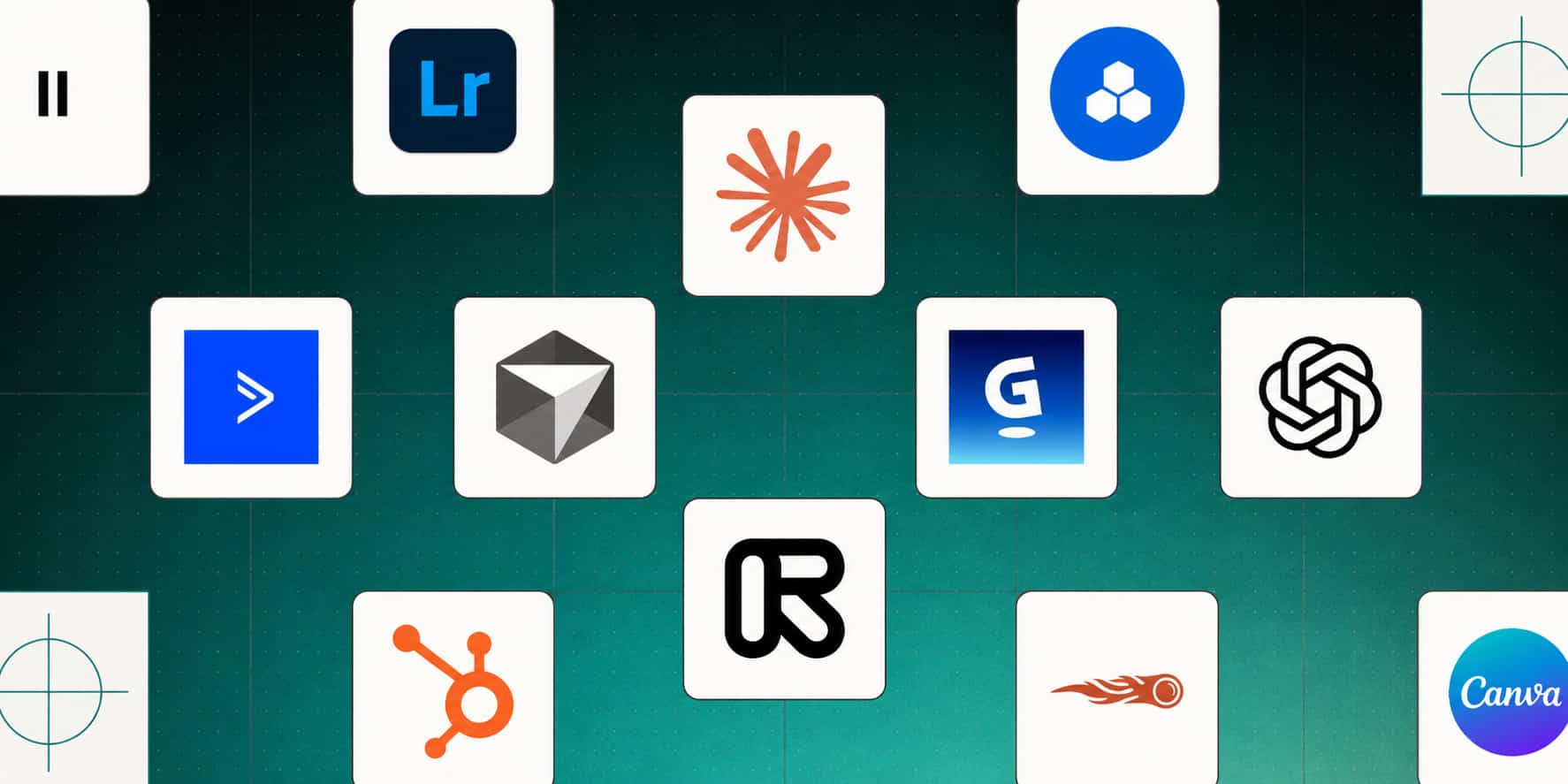
Best AI Marketing Tools at a Glance
| Tool | Best For | Main Use Case | Good For | Limitation |
|---|---|---|---|---|
| ChatGPT | General marketing support | Writing, research, ideation, summaries, prompts | Content teams, founders, general marketers | Needs human review for accuracy and brand voice |
| Claude | Long-form writing and research | Drafting, analysis, content planning | Writers, strategists, research-heavy teams | May still need fact-checking and workflow tools |
| HubSpot | CRM and marketing automation | Email, lead management, personalization, reporting | Growing businesses and sales-led teams | Can be expensive or complex for very small teams |
| Semrush | SEO and competitor research | Keyword research, content optimization, AI visibility | SEO teams, content marketers, agencies | Best value comes from regular SEO use |
| Zapier | Workflow automation | Connecting apps and automating repetitive tasks | Operators, lean teams, no-code workflows | Requires clear process design |
| Canva | Design and visual content | Social graphics, presentations, ads, brand assets | Small teams, creators, social marketers | Not a full replacement for advanced design work |
| Jasper | AI copywriting | Campaign copy, brand voice, content production | Marketing teams with repeat content needs | Works best with strong brand guidelines |
| Surfer SEO | Content optimization | SEO briefs, content scoring, on-page optimization | SEO writers and content teams | Should not be followed blindly without SERP judgment |
| Clearscope | Content quality and relevance | Content optimization and topic coverage | Editorial SEO teams | Higher cost than basic writing tools |
| Hootsuite | Social media management | Scheduling, social planning, reporting | Social media teams | AI features depend on broader social workflow needs |
| Synthesia | AI video creation | Avatar videos, explainers, localization | Training, product marketing, global teams | Not ideal for every brand tone or creative style |
| AdCreative.ai | Ad creative production | Paid ad variations and creative testing | Performance marketers | AI creative still needs testing and human oversight |
| ActiveCampaign | Email automation | Email flows, segmentation, customer journeys | SMBs and lifecycle marketers | Requires clean data and thoughtful automation setup |
Best AI Marketing Tools by Use Case
The strongest way to choose AI marketing tools is by workflow. A random list of tools can create more confusion. A use-case approach helps you match each tool to a real business problem.
Think about the task first. Are you trying to write faster, improve rankings, automate reporting, create ads, manage social content, or personalize emails? Once the workflow is clear, the right tool becomes easier to evaluate.
AI Tools for Content Creation and Research
AI content tools help marketers create outlines, briefs, first drafts, social captions, email copy, landing page copy, and campaign ideas. Tools like ChatGPT, Claude, Jasper, Writer, Grammarly, and Hemingway can support different parts of the content process.
ChatGPT and Claude are strong for ideation, research summaries, content planning, and first drafts. Jasper and Writer are often used by marketing teams that need more structure around brand voice and campaign copy. Grammarly and Hemingway help improve clarity, grammar, and readability.
These tools are useful, but they should not publish content without review. AI can produce generic claims, miss context, or use a tone that does not match the brand. A human editor should check accuracy, originality, examples, and final positioning.
AI Tools for SEO and Content Optimization
AI SEO tools help with keyword research, competitor analysis, content briefs, content scoring, internal linking ideas, and on-page optimization. Tools such as Semrush, Surfer SEO, Clearscope, and ContentShake AI are built for search-focused workflows.
Semrush is useful for keyword research, competitive analysis, rank tracking, and broader SEO planning. Surfer SEO and Clearscope help writers understand topic coverage, related terms, and content gaps. These tools can make SEO content more structured and easier to optimize.
However, SEO tools should guide decisions, not replace judgment. A high content score does not always mean the page satisfies intent. Writers still need to understand the searcher, the SERP, the product, and the practical answer the reader expects.
AI Tools for AI Search Visibility
AI search visibility tools help brands understand how they appear in AI-generated answers across platforms such as ChatGPT, Gemini, Perplexity, and Google AI Overviews. This is becoming more important as users rely on AI engines for product discovery, comparisons, and quick answers.
These tools may monitor brand mentions, competitor mentions, citation sources, sentiment, and answer consistency. For example, a company may want to know whether AI engines mention its brand when users search for a product category.
AI search visibility is related to SEO, but it is not the same as traditional rank tracking. Traditional SEO focuses on search engine results pages. AI visibility focuses on whether AI systems understand, mention, and cite a brand or topic accurately.
AI Tools for Marketing Automation Workflows
AI marketing automation tools help teams reduce repetitive work. They can connect apps, route leads, update CRM records, summarize form submissions, trigger email flows, generate reports, and move tasks between platforms.
Zapier is useful for connecting tools without heavy development work. Gumloop and similar automation platforms can help teams build AI-assisted workflows. HubSpot and ActiveCampaign also include automation features for CRM, email, and customer journeys.
The key is to automate a process that already makes sense. If the workflow is messy, AI automation can make the mess faster. Start with simple tasks such as lead routing, reporting summaries, content operations, and follow-up reminders.
AI Tools for Social Media Marketing
AI social media tools help with content calendars, post ideas, captions, scheduling, creative production, and performance analysis. Tools such as Hootsuite, Canva, Flick, Buffer, and other social platforms can support these workflows.
For social media teams, AI can speed up brainstorming and repurposing. A blog post can become a LinkedIn post, an Instagram caption, a short video script, and a newsletter teaser. AI can also suggest posting angles for different audiences.
Still, social media depends heavily on timing, taste, community understanding, and brand personality. AI can help produce options, but a human should decide what sounds authentic and what fits the platform.
AI Tools for Email Marketing Automation
AI email marketing tools help with subject lines, segmentation, lifecycle flows, personalization, send-time testing, and campaign optimization. Platforms such as HubSpot, ActiveCampaign, Mailchimp, and similar tools often include AI features for email workflows.
These tools are useful when they connect to real customer data. For example, AI can help create different email versions for new leads, repeat buyers, inactive customers, or high-intent prospects.
The risk is that some AI email tools only provide basic templates with better branding. If the tool does not improve segmentation, timing, personalization, testing, or performance measurement, it may not add much value.
AI Tools for Ad Creative and Paid Campaigns
AI ad tools help marketers create ad copy, visual variations, landing page ideas, and campaign creative faster. Tools such as AdCreative.ai, Canva, ChatGPT, and native AI features inside ad platforms can support this work.
These tools are useful for testing more creative angles. A performance marketer can generate multiple headline options, visual directions, audience-specific hooks, or call-to-action variations before launching a campaign.
AI should support paid media decisions, not control them without oversight. Real ad spend requires human judgment, budget control, compliance review, audience understanding, and performance analysis.
AI Tools for Design, Images, and Video
AI design and media tools help marketers create graphics, edit photos, generate images, build presentations, and produce videos. Canva and Adobe Photoshop are useful for visual production. Synthesia and similar tools can help create avatar videos, explainers, training videos, and localized content.
These tools are especially useful for small teams that need creative assets but do not have a large design or video department. They can speed up social graphics, ad mockups, product visuals, thumbnails, and internal marketing materials.
The limitation is creative quality. AI visuals may look polished but still feel generic, off-brand, or unsuitable for a serious campaign. Strong brand guidelines and design review are still important.
AI Tools for CRM, Lead Scoring, and Personalization
AI CRM tools help teams manage customer data, score leads, personalize outreach, and improve follow-up. Platforms such as HubSpot, ActiveCampaign, and other CRM systems may use AI to summarize interactions, recommend actions, segment contacts, or identify high-intent leads.
This can help sales and marketing teams work from the same customer view. For example, AI can help prioritize leads based on engagement, suggest personalized email copy, or trigger follow-up workflows after a customer takes a specific action.
CRM AI is only as useful as the data behind it. If contact records are messy, consent is unclear, or lifecycle stages are poorly defined, the AI output will be weaker.
How AI Marketing Tools Improve Marketing Efficiency
AI marketing tools improve efficiency by reducing the time spent on repetitive, manual, or draft-level tasks. They help marketers move from blank page to first draft, from raw data to summary, and from one campaign asset to many variations.
Content teams can use AI to create outlines, repurpose content, summarize research, and edit drafts. Social media teams can use AI to generate caption ideas and build content calendars. Marketing operators can use AI automation to connect tools, route leads, and summarize reports.
AI can also support personalization. Instead of sending one generic message to every customer, teams can create different versions based on audience segment, behavior, or stage in the funnel.
The biggest efficiency gain comes when AI is placed inside a real workflow. A tool is less useful when it sits outside the team’s CRM, CMS, email platform, project management system, or analytics process.
How to Choose the Right AI Marketing Tools
Choosing the right AI marketing tool starts with the problem, not the product. A tool should solve a real bottleneck in your marketing workflow.
Before buying, ask what task you want to improve. Are you trying to create content faster, improve SEO, produce ad creative, manage email flows, personalize CRM outreach, automate reporting, or monitor AI search visibility?
Once the workflow is clear, compare tools based on fit, integration, output quality, privacy, pricing, and adoption. The best tool is not always the most advanced one. It is the one your team can use consistently to improve real work.
Match the Tool to Your Marketing Workflow
Start by mapping the work your team does every week. Look for tasks that are repetitive, slow, expensive, or inconsistent.
For example, a content team may need AI for briefs and editing. A social team may need AI for scheduling and repurposing. A small business may need AI for simple email campaigns, graphics, and follow-up automation.
Avoid buying tools only because they are popular. Popular tools can still be a poor fit if they do not match your workflow.
Check Integrations, Data Privacy, and Team Adoption
A strong AI marketing tool should fit your existing stack. Check whether it connects with your CRM, CMS, analytics platform, email tool, social scheduler, project management system, and ad platforms.
Data privacy also matters. Marketing tools may handle customer data, email lists, lead details, campaign performance, and internal strategy. Review what data the tool collects, how it uses that data, and what controls are available.
Team adoption is just as important. If the tool is too complex, poorly documented, or hard to fit into daily work, it may not produce a return.
Compare Pricing, Output Quality, and ROI
AI tools can look affordable at first but become expensive when multiple team members, add-ons, usage limits, or integrations are included. Compare the full cost, not just the entry price.
Then test output quality. A good tool should create work that is useful with editing, not work that takes longer to fix than to create from scratch.
Measure ROI in practical terms. Look at time saved, campaign output, content quality, conversion improvement, reporting speed, or reduced manual work. If the tool cannot be tied to a useful outcome, it may not be worth keeping.
Keep Human Review in the Process
AI marketing tools work best when humans guide strategy and review output. AI can draft, summarize, suggest, automate, and analyze. Humans still need to decide what is accurate, relevant, ethical, compliant, and on-brand.
This is especially important for ads, legal claims, health claims, finance content, customer data, and public brand messaging. Mistakes in these areas can damage trust.
A simple review process helps. Set rules for who approves AI-generated content, how facts are checked, and how brand voice is maintained.
AI Marketing Tools for Small Businesses
Small businesses can benefit from AI marketing tools, especially when they start with simple and practical use cases. The best starting points are usually content creation, design, email marketing, social scheduling, customer follow-up, and basic automation.
A small business does not need a large enterprise AI stack right away. A lean setup might include a writing assistant, a design tool, an email platform, a CRM, and a simple automation tool.
The goal is to save time without adding complexity. If a tool requires weeks of setup, expensive onboarding, or a dedicated operator, it may not be the right first choice for a small team.
Small businesses should also avoid buying multiple tools that do the same thing. One useful tool used every week is better than five tools that overlap and create confusion.
Common Problems With AI Marketing Tools
The biggest problem with AI marketing tools is tool overload. Many platforms now claim to include AI, and many features overlap. This makes it hard for marketers to know which tools are actually useful.
Another common concern is overhyped AI branding. Some tools promise major productivity gains but only provide basic templates, simple text generation, or surface-level automation. These may still be useful, but they should not be treated as strategic systems.
Output quality is another issue. AI-generated content can sound generic, repeat common ideas, or miss brand context. It can also produce inaccurate information if the user does not provide enough guidance or review.
Data privacy and integrations also deserve attention. A tool that handles customer data should be evaluated carefully. A tool that does not connect with your existing systems may create more manual work instead of reducing it.
The safest approach is to test tools in real workflows before committing. Use a trial, define one use case, measure the result, and decide whether the tool improves speed, quality, or performance.
AI Marketing Tools Statistics and Market Trends
AI adoption in marketing is growing because teams are under pressure to create more content, personalize more campaigns, and make faster decisions. Content creation, media production, automation, and analytics are among the most common areas where marketers apply AI.
Industry studies have reported strong use of AI for content creation, content optimization, repetitive task automation, and media production. These trends show that AI is no longer a niche experiment for marketing teams.
Market research also points to continued growth in AI marketing software. More tools are adding AI features for CRM, SEO, social media, ad creative, reporting, and customer engagement.
The practical takeaway is simple: AI marketing tools are becoming normal parts of the marketing stack. But adoption alone does not prove value. Businesses still need to choose tools based on workflow fit, quality, privacy, and measurable results.
Read more: What Are the Best AI Apps to Use for Shopify?
FAQs About AI Marketing Tools
What are AI marketing tools?
AI marketing tools are software platforms that use artificial intelligence to help with marketing tasks. They can support content creation, SEO, email marketing, CRM, automation, social media, ad creative, analytics, personalization, and reporting. Some tools generate text, images, or videos. Others analyze data, score leads, automate workflows, or recommend campaign improvements. The purpose is to help marketers work faster and make better decisions. However, AI tools still need human guidance for strategy, accuracy, brand voice, and final approval.
What is the best AI tool for marketing?
There is no single best AI marketing tool for every business. The best tool depends on the task. ChatGPT and Claude are useful for writing, research, and ideation. Semrush, Surfer SEO, and Clearscope are useful for SEO and content optimization. Canva and Adobe Photoshop help with creative production. HubSpot and ActiveCampaign support CRM and email automation. Zapier helps automate workflows. The right choice depends on your budget, team size, integrations, data needs, and marketing goals.
How do AI tools improve marketing efficiency?
AI tools improve marketing efficiency by reducing repetitive work and speeding up draft-level tasks. They can help create content outlines, write first drafts, summarize research, generate social captions, personalize emails, automate lead routing, and produce campaign reports. They also help teams create more variations for ads, emails, and landing pages. The biggest gains happen when AI is connected to a real workflow. AI should not just create more output. It should help the team produce better work with less wasted time.
Can small businesses benefit from AI marketing tools?
Yes, small businesses can benefit from AI marketing tools when they choose simple tools that solve practical problems. A small business can use AI to write emails, create social posts, design graphics, summarize customer feedback, schedule campaigns, and automate follow-ups. The key is to avoid overbuilt software too early. Small teams should start with affordable tools that are easy to use and connect to their existing workflow. A small, useful stack is better than a large stack that no one uses.
Are AI marketing tools worth it?
AI marketing tools are worth it when they save time, improve output quality, support better decisions, or help the team execute campaigns more consistently. They are not worth it when they create generic content, duplicate existing tools, require too much setup, or fail to connect with your workflow. Before committing, test one tool on one real use case. Measure the time saved, the quality of the output, and whether the tool helps your team complete work faster or better.
Can AI replace marketers?
AI can replace some repetitive marketing tasks, but it should not replace marketers completely. It can draft copy, summarize data, generate ideas, build variations, and automate routine actions. It cannot fully replace strategy, customer insight, creative judgment, ethical review, brand positioning, compliance, or accountability. Marketing still requires understanding people, markets, timing, offers, and business goals. The best use of AI is to support marketers, not remove human judgment from the process.
Final Recommendation: Build an AI Marketing Stack, Not Just a Tool List
AI marketing tools are useful when they solve a specific workflow problem, integrate with your existing stack, and produce output your team can review and improve. They can be trusted when they save time, improve consistency, support better decisions, and operate inside a clear process.
Be cautious with tools that are expensive, overbuilt, poorly integrated, vague about data usage, or marketed as a replacement for strategy. Also be careful with tools that produce generic content or require more time to manage than they save.
The best next step is to start small. Choose two or three tools based on your most important workflow: content, SEO, creative, automation, CRM, email, or reporting. Test them in real work, measure the result, and keep only the tools that improve speed, quality, or performance.
A strong AI marketing stack is not the biggest stack. It is the stack your team actually uses to make better marketing decisions and execute faster.