Starting a print-on-demand (POD) business means choosing a niche, creating designs, connecting a POD supplier such as Printful, Printify, or Gelato, and selling products through an ecommerce store like Shopify.
The main advantage is simple: you do not need inventory before making sales. The supplier prints, packs, and ships products after customers place orders.
However, POD is not a shortcut to instant profit. Successful stores usually come from testing different designs, understanding a specific audience, improving product quality, and building a repeatable marketing process.
This guide explains how to start a print-on-demand business step by step.
What Print-on-Demand Actually Means
A print-on-demand business creates products only after a customer places an order.
Instead of buying hundreds of products upfront, sellers upload designs to a POD supplier. The supplier then prints the design on products such as:
- T-shirts
- Hoodies
- Mugs
- Tote bags
- Phone cases
- Accessories
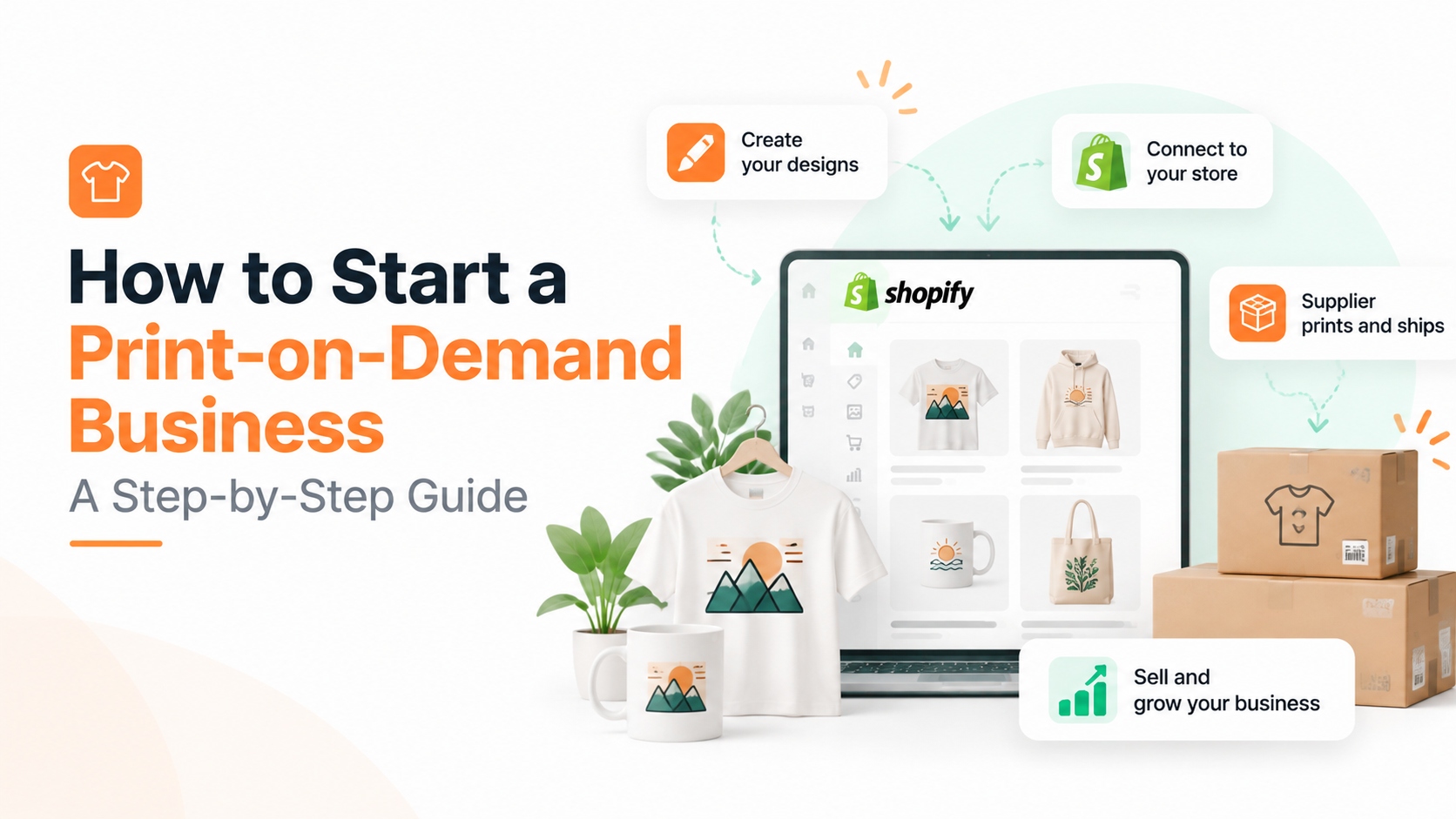
The workflow looks like this:
- Create a design.
- Upload the design to a POD platform.
- Connect the supplier with your Shopify store.
- Customer purchases the product.
- Supplier produces and ships the order.
Because inventory is not stored by the seller, startup costs are lower compared with traditional ecommerce.
The trade-off is that each product usually costs more than buying in bulk. This means POD businesses need strong product ideas, good positioning, and repeat sales to grow.
Step 1: Pick a Specific Niche, Not Just a Product Category
The biggest mistake beginners make is targeting everyone.
A store selling “funny shirts for everyone” has no clear customer. A store creating designs for a specific group has a stronger reason to exist.
Good POD niches often include:
- Nurses
- Teachers
- Pet owners
- Gamers
- Sports communities
- Hobby groups
- Local communities
A niche helps you understand:
- What products people want
- What language they use
- What designs feel personal
- What problems your products solve
How to Find a Profitable POD Niche
Use customer behavior instead of guessing.
Google Trends
Google Trends helps identify whether interest in a topic is stable or only temporary.
Avoid jumping into short trends that disappear quickly.
Etsy and Amazon Reviews
Marketplace reviews reveal:
- What customers already buy
- What they dislike
- What products are missing
These insights can help create better designs.
Reddit and Facebook Communities
Online communities often show the exact phrases, jokes, and interests customers respond to.
The goal is not finding a random product idea.
The goal is understanding a group of people well enough to create products they want.
For more product research ideas, Shopify sellers can also explore guides about finding trending products and validating product opportunities before investing time into designs.
- Learn more about identifying product opportunities through trending product research ideas.
Step 2: Choose Products That Match Your Audience
The best POD products fit how customers actually live.
A yoga audience may prefer:
- Yoga leggings
- Water bottles
- Towels
A coffee audience may prefer:
- Coffee mugs
- Tumblers
- Tote bags
A pet owner audience may prefer:
- Custom pet shirts
- Pet accessories
- Personalized gifts
The product should support the customer’s identity.
A random catalog with unrelated products makes the store harder to understand.
Start with a small product collection. Test demand first, then expand.
Step 3: Create Designs Even Without Professional Skills
You do not need to be a professional designer to start.
There are three common ways to create POD designs.
Use Design Tools
Tools like Canva and Kittl help beginners create designs using:
- Templates
- Fonts
- Layouts
- Color combinations
The goal is not creating complicated artwork.
Many successful POD products focus on simple ideas with strong emotional connection.
Hire Freelance Designers
Freelance marketplaces such as Fiverr allow sellers to hire designers for individual projects.
Typical costs range from around $20–$150 per design depending on complexity.
Use POD Platform Design Features
Many POD suppliers include mockup generators and design tools to help sellers prepare products.
Before publishing products, always order samples.
A design can look different after printing because:
- Colors may change
- Image size may feel different
- Fabric texture affects appearance
Physical samples help prevent quality problems before customers receive the product.
Step 4: Compare POD Suppliers Based on Workflow
Choosing a POD supplier should not only depend on popularity.
Look at:
- Product quality
- Shipping speed
- Production locations
- Shopify integration
- Customer support
- Product variety
| Supplier | Shopify Integration | Known For | Consideration |
|---|---|---|---|
| Printful | Native app | Consistent print quality and fulfillment | Higher base prices |
| Printify | Native app | Large supplier network and competitive pricing | Quality depends on provider |
| Gelato | Native app | Local production network across multiple countries | Smaller catalog |
Before choosing a supplier:
- Order samples.
- Check print quality.
- Wash products if needed.
- Compare the real product with the mockup.
Supplier quality directly affects customer satisfaction and return rates.
- Sellers who need help managing fulfillment workflows can explore Shopify fulfillment apps and solutions.
Step 5: Build Your Print-on-Demand Store on Shopify
A Shopify store gives POD sellers control over branding, customer experience, and long-term growth.
After connecting your POD supplier, focus on building product pages that help customers make buying decisions.
Important elements include:
- Clear product images
- Accurate product descriptions
- Size charts
- Material information
- Shipping details
- Return policies
- Customer reviews
Many POD stores fail because they only use supplier mockups. Real product photos help customers understand what they will receive.
Your product page should answer common buyer questions:
- What does the product look like?
- What material is used?
- How does the size fit?
- When will it arrive?
- Why should customers buy from this store?
For sellers who are new to Shopify, setting up the store structure correctly is important before adding many products.
- Follow a complete process with this guide to setting up a Shopify store.
- Improve your product pages with Shopify product page optimization strategies.
Step 6: Create Product Pages That Convert
A POD product page should sell the idea behind the design, not only the product itself.
For example:
Weak description:
“Funny cat shirt made from cotton.”
Better approach:
“A comfortable cotton shirt created for cat lovers who want to show their personality.”
Good POD product descriptions include:
Product Benefits
Explain why customers want the item.
Examples:
- Comfortable daily wear
- Gift option for specific occasions
- Unique design for a specific community
Product Details
Include:
- Material
- Size options
- Available colors
- Care instructions
Visual Proof
Use:
- Lifestyle images
- Customer photos
- Product videos
Visual content helps customers imagine owning the product.
- Learn how to write stronger ecommerce copy with product descriptions that convert.
Step 7: Price Your Products Based on Real Costs
POD pricing should include every cost involved.
The basic formula:
Product cost + Printing cost + Shipping cost + Shopify fees + Marketing cost + Profit margin = Selling price
Typical POD profit margins are often around 15–30%.
Some products can achieve higher margins, especially:
- Stickers
- Digital add-ons
- Low-cost accessories
Apparel products usually have lower margins because production costs are higher.
Example:
| Cost | Amount |
|---|---|
| Product + Printing | $12 |
| Shipping | $4 |
| Shopify and payment fees | $2 |
| Total Cost | $18 |
| Selling Price | $29.99 |
| Estimated Margin | Around $12 |
Avoid copying competitor prices without understanding your own costs.
Test different price points and monitor:
- Conversion rate
- Customer feedback
- Profit per order
Step 8: Market Your POD Store Before and After Launch
Launching a store is only the beginning.
POD businesses need continuous marketing because designs compete for customer attention.
Build Organic Traffic
Create content around your niche.
Examples:
- Gift guides
- Community stories
- Product inspiration
- Design explanations
A blog can bring visitors long after publishing.
- Learn how to use content strategies with Shopify content marketing apps.
- Improve search visibility with Shopify SEO strategies.
Use Social Media Marketing
Many POD brands grow through:
- TikTok videos
- Instagram Reels
- Pinterest content
- Facebook communities
Short videos showing:
- Design creation
- Packaging
- Customer reactions
- Product styling
can help customers connect with the brand.
- Explore TikTok marketing strategies for ecommerce stores.
- Learn how to improve social engagement with ways to engage with social media followers.
Work With Micro Influencers
Small creators often have strong relationships with specific communities.
A creator with 5,000 followers in a niche can sometimes create stronger engagement than a general influencer with a larger audience.
Step 9: Track Store Performance After Launch
Successful POD sellers improve products based on data.
Track these important metrics:
Conversion Rate
Conversion rate shows how many visitors become buyers.
A low conversion rate may indicate:
- Weak product images
- Poor descriptions
- Wrong audience targeting
- Pricing problems
Return Rate
High returns may signal:
- Product quality issues
- Incorrect sizing information
- Supplier problems
Compare suppliers regularly.
Repeat Purchase Rate
Long-term POD businesses do not depend only on new customers.
Returning buyers show that:
- The designs connect with customers
- The brand has loyalty
- Customers trust the store
- Use store data better with Shopify analytics tools.
Startup Costs for a Print-on-Demand Business
A POD business can start with relatively low investment.
| Item | Typical Cost |
|---|---|
| Shopify plan | $29–$79/month |
| Domain | $10–$20/year |
| Design work | $20–$150 per design |
| Product samples | $50–$200 |
| Initial advertising | $0–$500 |
Most beginners can start with around $100–$1,500, depending on how much they invest in designs, samples, and advertising.
The largest expenses are usually optional.
Many sellers reduce costs by:
- Creating their own designs
- Using organic traffic
- Testing products before running ads
FAQ
Is print-on-demand profitable?
Yes, but profitability depends on product testing, niche selection, pricing, and marketing.
A POD business usually works better as a long-term testing process instead of relying on one viral product.
Successful sellers continue improving:
- Designs
- Product selection
- Customer experience
- Marketing channels
How much money do I need to start a POD business?
Many sellers can start with around $100–$500.
The basic costs include:
- Shopify subscription
- Domain name
- Product samples
- Optional design tools
Paid advertising and professional design services can be added later.
Can I start print-on-demand with no inventory?
Yes.
The POD model allows sellers to avoid purchasing inventory before sales.
Suppliers such as Printful, Printify, and Gelato only produce products after customers place orders.
Why do many POD stores fail?
The most common reason is stopping too early.
Many beginners upload one design, wait for sales, and quit.
A sustainable POD store usually requires:
- Multiple tested designs
- Customer research
- Continuous improvement
- Better marketing