Today, people often use the terms influencer, KOL, and KOC interchangeably to refer to anyone with online influence. While these roles share similarities — all can shape opinions and impact purchasing decisions — each term represents a different level of expertise, credibility, and influence. Understanding what a KOL truly is, and how it differs from influencers and KOCs, helps brands choose the right collaborator and achieve more precise, effective marketing results.
What does KOL mean?
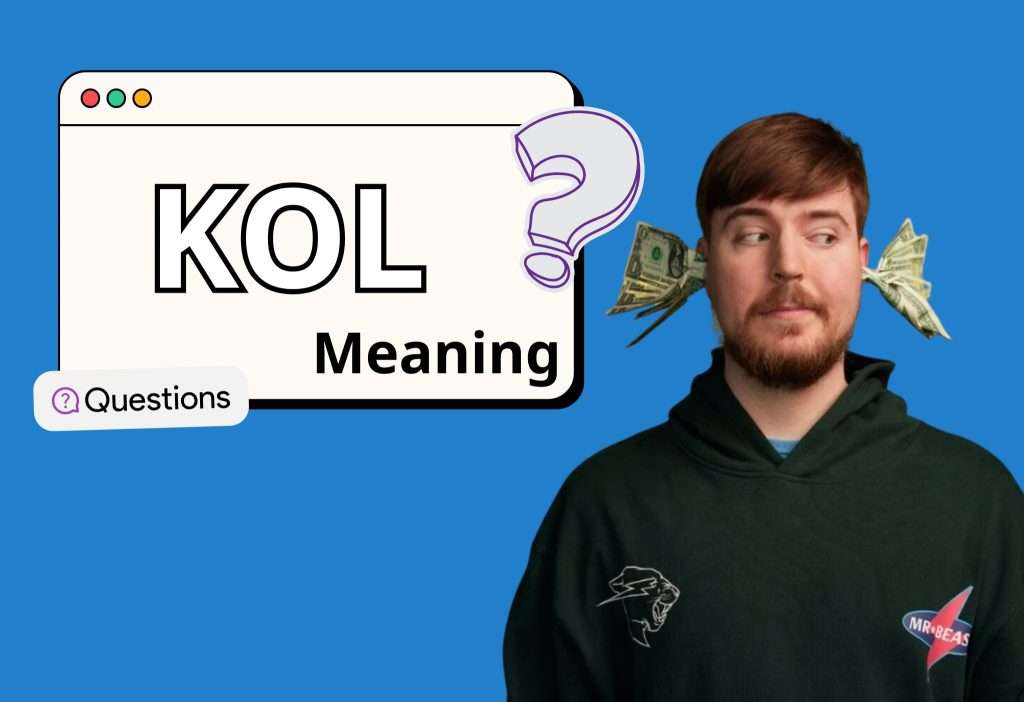
KOLs (Key Opinion Leaders) are individuals who hold significant influence within a community due to their strong expertise and deep understanding of the field they operate in.
These KOLs can be industry specialists, celebrities, journalists, entrepreneurs, politicians, scientists, or even real users with credible firsthand experience. They appear across every sector — from beauty, fashion, food, and sports to highly specialized areas like technology and healthcare. Their authority and insight make their opinions highly trusted, giving them a powerful role in shaping public perception and influencing consumer behavior.

In more specialized fields like food, a KOL may be a renowned chef or a popular food blogger. In the health and wellness space, influential figures often include nutrition experts or individuals with solid athletic training backgrounds. Across industries, KOLs impact specific interest groups and play a meaningful role in driving purchase decisions.
Businesses frequently collaborate with KOLs in marketing campaigns to increase brand awareness and build customer trust in their products or services.
For example, what is a Shopify KOL?
A Shopìfy KOL is a content creator participating in Shopìfy’s affiliate-style program. These KOLs — active on TikTok, Facebook, Instagram, and other platforms across categories like beauty, lifestyle, and food reviews — share Shopìfy product links with their audience. They earn commissions from every successful purchase made through their shared links.
Similarly, a TikTok KOL is an influential creator in a specific niche such as fashion, modeling, dancing, cooking, or other lifestyle segments. TikTok KOLs leverage their content, credibility, and audience engagement to promote products and amplify brand visibility effectively.
KOL vs KOC vs Influencer: What’s the Difference?
| KOL (Key Opinion Leader) | KOC (Key Opinion Consumer) | Influencer |
|---|---|---|
| Recognized expert with deep authority in a specific industry | Everyday consumer who shares authentic product experiences | Digital creator who builds influence through social content |
| Influence driven by professional knowledge and high credibility | Influence driven by relatable, real-life usage | Influence driven by creativity, personality, and audience engagement |
| Large or industry-focused audience that trusts their expertise | Smaller, highly engaged audience in niche communities | Large follower base across major social platforms |
| Communicates across multiple channels such as media, events, and online platforms | Communicates mainly through reviews, discussions, and community posts | Communicates primarily through short-form and long-form social content |
| Works through formal brand partnerships, campaigns, or ambassador roles | Rarely forms formal contracts; opinions remain independent | Works through sponsored posts, collaborations, and affiliate programs |
| Best for building trust, supporting brand authority, and launching high-credibility products | Best for generating authentic recommendations and influencing purchase decisions | Best for driving visibility, increasing reach, and boosting engagement |
How to Choose the Most Effective KOLs for Your Business
KOL marketing becomes far more effective when brands select partners whose expertise, audience, and content style directly match the product they promote. The first priority is assessing whether a KOL’s profile aligns with your brand and whether their followers represent real potential buyers. Factors such as audience demographics, engagement rate, credibility, and collaboration cost must all be evaluated together to ensure strong marketing ROI. When a KOL is aligned with the product category, their recommendations feel natural and build stronger trust with consumers.
- Professional expertise is another essential requirement: A qualified KOL must understand the product they introduce and have enough industry knowledge to speak about it accurately. If a KOL lacks understanding, it weakens both their personal reputation and your brand’s image. Expertise-based trust is what makes a KOL different from a general influencer, and it is the foundation that allows them to deliver persuasive product endorsements that resonate with the audience.
- Experience also plays a major role in selecting the right KOL: Brands should review how long the KOL has been active, what types of campaigns they have handled, and whether previous partners were satisfied with their performance. A KOL with strong project history understands workflow, deadlines, communication standards, and brand expectations, which leads to smoother and more effective campaign execution. Past collaborations provide valuable signals for predicting campaign success.
- Audience sentiment and content quality must also be considered: A KOL with a loyal and supportive fan base naturally creates higher brand visibility and credibility. Consumers tend to trust KOLs who share honest, positive, and experience-based content. Working with KOLs who maintain authenticity, transparency, and consistent value helps brands reach a more motivated audience, increasing conversion opportunities and driving stronger sales results.
3 Core Principles for Choosing Effective KOLs for Your Business
Principle 1: Reach
Reach refers to how many people a KOL can influence, measured primarily by follower count. KOLs are typically categorized into four tiers: Nano, Micro, Macro, and Mega. Brands often use this tiering system to match KOL size with their budget, product category, and campaign objective. However, bigger is not always better. Partnering with a high-profile KOL who does not match your target audience can quickly drain your budget without delivering meaningful results. In many cases, smaller but highly aligned KOLs outperform larger creators because they reach the right customers rather than the biggest crowd.
Principle 2: Relevance
Relevance is the most important factor when evaluating KOL suitability. To measure it effectively, brands assess a set of criteria:
• Personal image: What style or identity does the KOL represent? Bold and edgy, or soft and minimalist?
• Demographics: Age, profession, gender, lifestyle, and marital status.
• Primary platform: Where they create content — YouTube, Instagram, TikTok, Facebook, or multi-platform presence.
• Follower profile: Audience size, interests, and whether their followers match your customer segment.
• Content format: Do they specialize in video storytelling, short-form content, podcasting, photography, or blog reviews?
A KOL must be contextually aligned with your product or service. Without that connection, even large creators struggle to generate trust or conversions.
Principle 3: Resonance
Resonance measures how well a KOL can impact consumer behavior. This metric is visible through engagement rates, comment quality, content interaction, and the change in revenue before and after collaboration. Many factors affect resonance, including campaign budget, marketing resources, brand perception, content quality, and product value. High-resonance KOLs convert attention into measurable results — awareness, traffic, or sales — making them strong long-term partners for performance-driven campaigns.
recommend for you:
- Want to control how many units each customer can buy across your store? Read The 10 Best Order Limit Shopify Apps (Perfect for Any Store Size).
- Running bundles and multipacks alongside quantity rules? Check out Kaching Bundles Quantity Break App Review: The Bundle Powerhouse for Shopify Merchants.
- Need more flexible discount campaigns beyond basic quantity tiers? Explore Discounty App Review: The All-in-One Bulk Discount Tool Every Shopify Merchant Needs.
- Want your quantity rules to sit on top of better product UX? Read Variant Swatch King Review: Elevate Your Shopify Product Pages with Seamless Variant Selection.
- Looking to measure how quantity rules and tiered pricing affect revenue? Check The 6 Best Shopify Reporting Apps for Smarter Analytics (2025).
- Running flash sales and worried about stock hoarding? Pair your limits with urgency from Essential Countdown Timer Bar App Review: Boost Conversions with FOMO on Shopify.
- Handling a lot of bulk or multipack orders and need smoother fulfillment? Read The 10 Best Orders and Shipping Shopify Apps for Growing Your Online Store (2025).
- Planning to combine quantity breaks with subscriptions for repeat buyers? Check Top 8 Subscription Shopify Apps to Boost Your Recurring Revenue in 2025.