Merchandising is the practice of presenting and promoting products to drive purchases. It covers product selection, pricing strategy, placement, signage, and visual presentation across physical and digital storefronts.
The purpose of merchandising is to shape the shopping experience in a way that increases conversion rates and average order value. Unlike marketing, which focuses on long-term brand awareness and relationship building, merchandising operates at the point of decision in Shopify stores, where customers choose what to buy.
Merchandising vs. Marketing vs. Sales: Clear Functional Boundaries
Marketing creates demand. Merchandising converts that demand. Sales completes and supports the transaction.
A typical flow starts with an email campaign that brings a shopper to a category page. Merchandising then guides choice through product sorting, labels, pricing cues, and layout. Sales finalizes payment and handles post-purchase support.
The key difference between merchandising and marketing lies in intent. Marketing drives traffic. Merchandising drives selection. Clear ownership of these roles helps founders avoid overlap, execution gaps, and diluted accountability.
Merchandise vs. Merchandising: A Common Founder Misunderstanding

Merchandise refers to the actual products being sold. Merchandising refers to the strategy used to sell those products.
Merchandising includes deciding which items to offer, how they are priced, how they are displayed, and how inventory is managed across channels. In simple terms, merchandise is what you sell, while merchandising is how you present, position, and convert it into revenue.
What Is Merchandising in Retail and Online? Core Types You’ll Use
Merchandising takes different forms depending on where and how customers shop. Founders typically work across retail, e-commerce, fashion, and commercial channels, each with its own tactics and success metrics.
Retail Merchandising (In-Store)
Retail merchandising focuses on how customers move through a physical space and interact with products. It includes store layout, shelf placement, end-cap displays, signage, and in-store promotions.
The objective is to guide attention and reduce friction at the shelf. Clear navigation, visible pricing, product demonstrations, and promotional cues influence what customers notice, pick up, and buy. Strong in-store merchandising turns foot traffic into purchases by shaping the path from entry to checkout.
E-commerce Merchandising (On-Site and Searchandising)
Online merchandising controls how products appear on category pages and in on-site search results. It includes optimized product titles, high-quality images, badges such as “bestseller” or “new,” sorting rules, filters, and personalized recommendations.
Searchandising ensures that the most relevant and profitable products surface first when shoppers search or browse. Platforms like Shopify support this with native Shopify merchandising features and apps that connect product discovery with conversion optimization, allowing brands to manage visibility and performance in one system.
Fashion Merchandising (Assortment and Storytelling)
Fashion merchandising combines product assortment with narrative. It focuses on building cohesive collections by season, price tier, and customer segment while maintaining a clear brand story.
This type of merchandising includes trend forecasting, line planning, seasonal drops, capsules, and visual storytelling. Performance is measured through sell-through rates, size curves, colorway performance, and the balance between assortment depth and breadth. For apparel and creator brands, effective fashion merchandising translates creative ideas into commercially viable collections.
Commercial Merchandising (Wholesale and B2B)
Commercial merchandising is designed for wholesale partners and business buyers rather than direct consumers. The emphasis is on clarity, efficiency, and trust.
It involves structured assortments, line sheets, minimum order quantities, pricing tiers, and standardized packaging for trade channels. Samples, combined with concise brand and product storytelling, help buyers evaluate quality and reduce decision time. Strong commercial merchandising shortens sales cycles and improves retailer confidence at scale.

What Does a Merchandiser Do? Roles, Skills, and Startup Realities
A merchandiser connects creativity with commerce. The role ensures the right products reach the right audience, at the right price, and in the right context. It blends market analysis, brand storytelling, and financial discipline to drive sustainable revenue.
In startups, this role often sits with the founder. Merchandising decisions shape cash flow, brand perception, and growth velocity, making the balance between vision and data critical from day one.
Core Responsibilities of a Merchandiser
A merchandiser’s scope changes with company size, but the fundamentals remain consistent.
Assortment planning focuses on selecting the right mix of products for each season or category. This requires analysing customer demand, market trends, and margin targets to decide which SKUs earn shelf or screen space.
Pricing and margin management define how products ladder across price points. Merchandisers monitor cost of goods sold, benchmark competitors, and decide when to apply discounts, bundles, or markdowns without eroding brand value.
Visual storytelling shapes how products are experienced. In physical retail, this means displays and layouts. In e-commerce, it translates into curated imagery, product descriptions, and collection structure that communicate quality, lifestyle, and use case.
Inventory management keeps supply aligned with demand. Merchandisers plan stock depth, replenishment timing, and exit strategies to avoid cash being trapped in slow-moving inventory or lost to stockouts.
Data analysis underpins every decision. Sales performance, conversion rates, and customer feedback guide continuous refinement. Comfort with tools like Microsoft Excel or analytics dashboards is essential.
In small teams, the merchandiser is often the founder. The advantage is speed. The risk is bias. The discipline lies in testing small, learning fast, and iterating based on evidence rather than instinct alone.
Skills, Tools, and Cross-Team Collaboration
The skills of a merchandiser sit at the intersection of logic and creativity. Strong numerical ability supports margin calculations, forecasting, and performance reviews. Equally important is the ability to recognise patterns, anticipate demand shifts, and shape a coherent product story.
Operational rigor matters. Merchandisers coordinate with suppliers, manage purchase orders, track lead times, and follow through on delivery commitments. This reliability protects both customer experience and internal planning.
The toolset spans physical and digital environments. POS or ERP systems track inventory and sell-through. Planogram tools support in-store layout decisions. In e-commerce, platforms with native merchandising controls and testing capabilities create rapid feedback loops for product positioning and assortment logic.
Day-to-Day Reality in Small Teams
In lean teams, merchandising follows a steady cadence. Mornings often begin with reviewing sell-through data to identify fast movers and underperformers. Midday focuses on content accuracy, refreshing product pages, and aligning visuals with current priorities. Afternoons are frequently reserved for supplier communication and operational follow-ups.
Weekly routines bring structure. A SKU-level health check reveals risks in depth or gaps in assortment. A promotion and launch review keeps merchandising aligned with marketing activity. Even without a full analytics stack, a simple dashboard tracking sales, inventory, and promotions provides real-time clarity.
For bootstrapped founders, dedicating a recurring block of time to merchandising creates consistency. This habit ensures regular, data-informed adjustments while preserving focus on long-term brand direction.
Why Merchandising Matters: Conversion, AOV, and Brand Equity
Strong merchandising delivers direct business impact. When products are presented clearly and logically, customers find what they need faster and feel confident buying more. This leads to higher conversion rates, increased average order value, and stronger brand recall.
Effective merchandising improves customer satisfaction, increases time spent shopping, accelerates inventory turnover, and reinforces brand recognition. In e-commerce, it plays a critical role in lifting add-to-cart rates and AOV by surfacing relevant products at the exact moment of intent.
Conversion Levers
Merchandising drives conversion by removing friction from the buying journey. Sorting rules, filters, and product badges help shoppers reach the first click quickly and with less effort.
On product pages, clarity is decisive. Size guides, comparison tables, and social proof reduce hesitation at the moment of choice. Simple tests, such as switching default sorting from “new” to “top converting,” reveal what influences action. Behaviour tools and analytics platforms like Google Analytics help validate whether these changes improve flow and outcomes.
AOV and Basket Building
Average order value increases when merchandising encourages larger baskets naturally. Bundles, “complete the look” suggestions, and free-shipping thresholds prompt additional items without feeling forced.
Price anchoring and good-better-best structures frame value clearly. Post-purchase cross-sells can extend revenue, as long as they stay relevant and do not interrupt the checkout experience.
Reducing Returns and Buyer Confusion
Returns decline when product information sets accurate expectations. Clear dimensions, material details, compatibility notes, and fit guidance help customers choose correctly the first time.
Monitoring return reasons and resolving them with better images or descriptions reduces waste and operational cost. Feedback from customer support provides real insight into where confusion still exists.
Brand Perception and Trust
Merchandising also shapes brand equity. Consistent visuals across channels signal professionalism, while storytelling explains pricing, quality, and craftsmanship.
Trust signals such as certifications, sustainability claims, and sourcing details strengthen credibility. Promotion strategy matters as well. Excessive discounts can weaken perceived value, while disciplined merchandising reinforces long-term brand trust and pricing power.
Merchandising Strategies
Effective merchandising does not require a full replatform or long roadmap. Small, focused changes can deliver immediate impact when aligned with customer intent and inventory realities.
Assortment Planning and Pricing Ladders
Strong merchandising starts with balance. Assortment depth and breadth must be managed deliberately so weak performers are trimmed to fund top sellers.
Clear good-better-best pricing ladders help customers understand value at a glance. Hero SKUs attract attention, while margin-friendly add-ons increase profitability. Regular reviews of size and color curves prevent broken assortments that slow conversion and frustrate shoppers.
Visual Hierarchy and Storytelling
First impressions shape outcomes. Place the most in-demand product above the fold and support it with credible social proof.
Use visual hierarchy to guide attention. Principles such as contrast, spacing, and color grouping help shoppers scan faster and decide sooner. Promotional banners should align with inventory goals, and each hero image benefits from a short caption explaining its relevance or benefit.
Seasonal and Promotional Merchandising
Seasonality creates urgency when planned with intent. Anchor promotions to key retail moments while protecting margin through structure rather than blanket discounts.
Pre-launch waitlists and countdowns build anticipation. Pairing slow-moving items with fast sellers helps clear inventory without heavy markdowns. After each campaign, a short performance review clarifies what worked, what stalled, and what to repeat.
Data-Driven Testing and Searchandising
On-site discovery improves through constant refinement. Update search synonyms and create fallbacks for zero-result queries to capture missed intent.
Test badge language such as “bestseller,” “top rated,” or “low stock” to understand what motivates action. Behaviour data from funnels, heatmaps, and search reports highlights where to focus next. Documenting results ensures learnings compound instead of resetting each cycle.
Metrics and KPIs: How to Know Your Merchandising Is Working
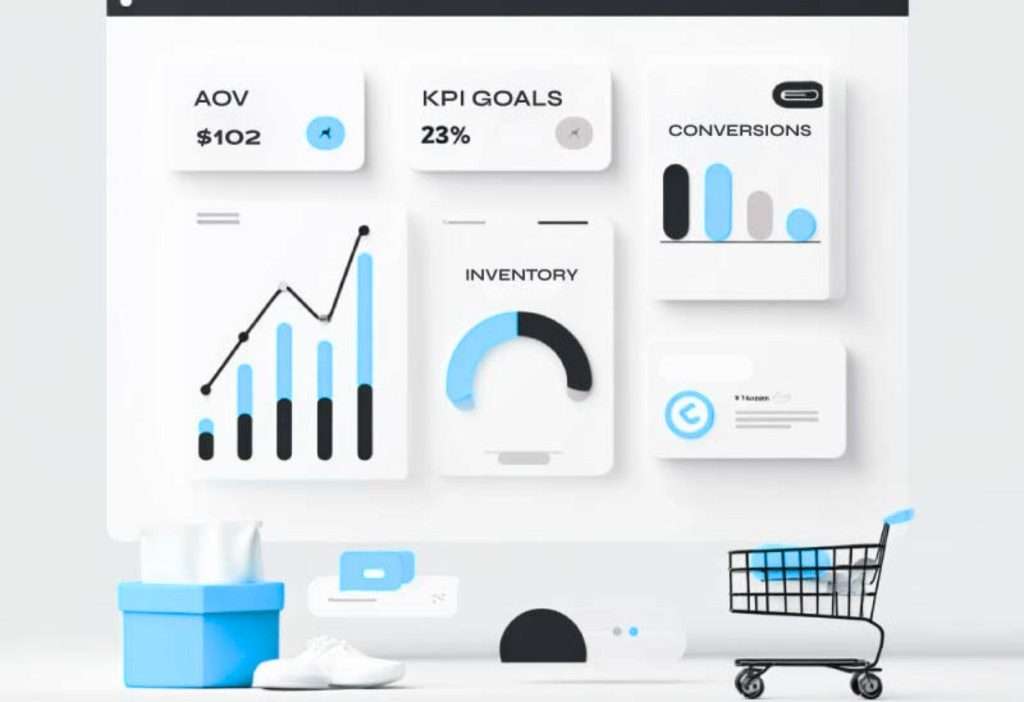
A strong measurement culture makes merchandising accountable and repeatable. The goal is not to track everything, but to focus on a small set of metrics that guide weekly decisions. Core merchandising KPIs include sell-through rate, gross margin, add-to-cart rate, and conversion by category. Separating retail and e-commerce metrics prevents misinterpretation and allows cleaner performance comparisons. A simple dashboard with clear targets keeps teams aligned and decisions grounded in data.
Financial and Inventory KPIs
Financial discipline underpins effective merchandising. Sell-through, gross margin, GMROI, and inventory turnover show how efficiently products convert into profit.
Sell-through rate measures demand velocity. It is calculated as units sold divided by units received, multiplied by 100. Selling 75 units out of 100 results in a 75 percent sell-through, which is generally considered strong. Lower rates often signal overstock, weak demand, or poor positioning.
Inventory turnover tracks how often stock is sold and replenished. It is calculated as cost of goods sold divided by average inventory. High turnover indicates efficient use of cash, while low turnover points to excess inventory tying up capital.
GMROI, or gross margin return on investment, measures profit generated per dollar of inventory. It is calculated by dividing gross margin by average inventory. A GMROI of 3.33 means earning 3.33 dollars for every dollar invested, with values above 2 typically viewed as healthy.
On-Site Experience Metrics
Digital merchandising depends on understanding shopper behavior. Click-through rate from category pages to product pages, add-to-cart rate, and search conversion reveal where friction appears in the journey.
Segmenting these metrics by device type and traffic source highlights hidden performance gaps. Path and cohort analysis help validate changes over time, while a weekly focus on the largest positive or negative mover keeps teams engaged with real learning. Tools such as Google Analytics often support this analysis at scale.
Category and Product Health
Regular category and SKU-level health checks maintain assortment balance. Contribution margin by category and product rank reveals true profit drivers. Cannibalization signals show when similar SKUs compete for the same demand, reducing overall returns.
Tracking attachment rates for bundles or accessories uncovers upsell opportunities. Applying an ABC or XYZ analysis helps prioritize effort, ensuring time and capital are focused on the products that drive growth, stability, and long-term performance.
Tools and Software: A Modern Merchandising Stack for Small Teams
Technology simplifies merchandising by turning data into clear actions. A focused stack helps small teams move faster without adding operational overhead.
Retail Tools: POS and Planogram Systems
Point-of-sale systems provide real-time visibility into sales, inventory levels, and customer behavior. Cloud-based POS tools sync in-store and online data, making sell-through trends and stock gaps visible immediately.
Planogram tools support layout decisions by showing how shelf placement affects performance. When combined, POS data and visual planning help teams optimize space, trigger timely reorders, and reduce inventory risk.
E-commerce and Merchandising Apps
E-commerce platforms such as Shopify, BigCommerce, and OrichiCommerce include native merchandising controls. These tools manage product sorting, filtering, recommendations, and on-site search behavior.
Used well, they enable searchandising by prioritizing high-intent and high-margin products, improving discoverability while supporting conversion goals.
Analytics, BI, and AI
Analytics tools translate merchandising actions into measurable outcomes. Platforms like Google Analytics and Klipfolio track conversion, traffic sources, and SKU-level performance in one view.
Advanced retail systems such as Lightspeed extend this with demand forecasting and reorder recommendations based on historical sell-through. Together, analytics and automation create a feedback loop that helps small teams make confident, data-backed merchandising decisions.
Step-by-Step: How to Merchandise a New Product From Idea to Repeatable Sales
Research and Positioning
Start with demand validation. Use market research frameworks and competitor analysis to understand who the product is for and why it should exist. Resources such as U.S. Small Business Administration market research guides help structure this early work.
Define the core problem the product solves and how it fits within your existing assortment. Clear positioning prevents overlap, sharpens messaging, and sets expectations before a single unit is produced.
Build the Assortment and Pricing
Decide how many SKUs to launch based on customer needs and operational capacity. Sizes, colors, or versions should serve distinct use cases, not just add variety.
Set pricing ladders that include entry, mid, and premium options. Margins must cover promotions, returns, and overhead while leaving room to scale. A disciplined pricing structure protects flexibility after launch.
Launch With Visuals and Content
Visuals shape first impressions. Invest in high-quality photography or realistic mock-ups that show context, detail, and use.
Product descriptions should connect features to lifestyle outcomes and include relevant search terms naturally. In physical retail, plan window displays or end-cap placements that surface the product’s key benefit within seconds.
Iterate With Data
Begin with a controlled release. Introduce the product to a smaller audience segment, such as newsletter subscribers or loyal customers, to test real demand.
Collect feedback on fit, quality, and price perception, then refine before full rollout. Track core KPIs including sell-through rate, inventory turnover, and GMROI. If performance lags, adjust pricing, imagery, or placement. If demand exceeds supply, increase order quantities or extend the range with new variants.
Document outcomes and decisions. These insights turn one successful launch into a repeatable merchandising system for future products.
Common Merchandising Mistakes and Fast Fixes
Merchandising mistakes are common, especially in early-stage brands, but most can be corrected quickly. The most frequent issues are over-assortment, weak navigation and search, inconsistent promotions, and thin product pages. Each problem has a clear fix that can be implemented without a full rebuild.
Over-Assortment and Inventory Risk
Too many SKUs overwhelm shoppers and trap cash in slow-moving stock. Reduce the assortment to proven sellers, bundle underperforming items, and define clear exit rules for markdowns.
Use contribution margin and inventory turnover to guide cuts. Reinvest the recovered capital into the top-performing 20 percent of products, where demand and margin are strongest.
Ignoring Navigation and Search
Poor discoverability blocks conversion before it starts. Add search synonyms and common misspellings, build filters around real product attributes, and surface the most popular options above the fold, especially on mobile.
Review zero-result search queries each week and resolve them quickly. Small improvements in search and navigation often deliver immediate gains in engagement and sales.
Inconsistent Pricing and Promotions
Unstructured discounting conditions customers to wait for deals. Set clear promotional guardrails and plan campaigns in advance to protect margin.
Reinforce value through messaging about materials, durability, craftsmanship, or sourcing. Document promotion outcomes so pricing decisions improve over time instead of repeating the same mistakes.
Thin Product Content
Shallow product pages increase hesitation and returns. Add detailed specifications, size or fit guidance, compatibility notes, and context-rich imagery.
A short FAQ addresses common objections before purchase, while care and usage instructions reduce post-purchase issues. Clear, complete product content builds confidence and lowers operational friction.
Merchandising Glossary: Speak the Language
Assortment planning: The process of selecting the right mix of products, sizes, and colors to meet customer demand while protecting margin and inventory efficiency.
Planogram: A visual guide that shows how and where products should be placed on shelves or pages to maximize visibility and sales.
AOV (Average Order Value: The average amount a customer spends per transaction.
Cross-merchandising: The practice of displaying complementary products together to encourage additional purchases.
Upselling: Encouraging customers to choose a higher-priced or more premium version of the product they are considering.
Bundle: A group of products sold together, often at a perceived value advantage, to increase basket size.
Sell-through rate: The percentage of inventory sold compared to the amount received, calculated as (Units Sold ÷ Units Received) × 100.
Inventory turnover: A measure of how often inventory is sold and replaced over a given period, calculated as COGS ÷ Average Inventory.
GMROI (Gross Margin Return on Investment): A profitability metric that shows how much gross margin is earned for each dollar invested in inventory, calculated as Gross Margin ÷ Average Inventory.
Visual merchandising: The use of layout, design, lighting, and visual elements to create appealing product presentations in physical or digital spaces.
Searchandising: The optimization of on-site search results and category pages to surface relevant products and improve conversion.
What Is Merchandising? And What Should You Do Next?
Merchandising is a powerful lever for entrepreneurs who want to move beyond simply selling products and start creating intentional shopping experiences.
By understanding how merchandising differs from marketing, applying the right merchandising types, using data to guide decisions, and tracking the right metrics, you gain direct influence over customer behavior and profitable growth.
Start small and stay focused. Audit your current assortment, optimize your highest-traffic product pages, and plan one clear seasonal promotion. Measure impact through sell-through rate, inventory turnover, and GMROI to understand what truly performs.
For solopreneurs, merchandising discipline matters even more. Limited time and capital require sharper focus on hero products, efficient inventory use, and promotions that generate fast, actionable insight.
Over time, merchandising shifts from instinct to system. It becomes a repeatable engine that communicates your brand story while consistently improving conversion and average order value.
Ready to go further? Learn from experienced founders and operators through practical insights, interviews, and real-world case studies across our blog, podcast, and invite-only community.
FAQs
What Do You Mean by Merchandising?
Merchandising is how products are presented, priced, and positioned to guide buying decisions. It aligns assortment, displays, and promotions so customers can find value quickly and purchase with confidence across physical and digital channels.
What Does a Merchandiser Do?
A merchandiser manages product mix, inventory, and presentation to drive sales. In e-commerce, this includes optimizing product pages, search results, and recommendations so shoppers see clear options and strong reasons to buy.
What Is an Example of Merchandising?
In retail, visual merchandising appears as window displays or in-store setups that spotlight new arrivals or promotions. Online, it shows up as curated homepages with cohesive imagery, banners, and storytelling that encourage discovery and purchase.
What Are the Four Types of Merchandising?
The four types are product merchandising, digital merchandising, planogram merchandising, and omnichannel merchandising. Each shapes how customers experience products through shelves, screens, or connected touchpoints.
What Are the Two Major Types of Merchandisers?
Retail merchandisers manage product placement and performance within stores or online platforms. Manufacturer merchandisers work with partners to ensure products are well positioned, competitively priced, and supported by promotions.
What Is the Rule of Three in Merchandising?
The rule of three groups products in sets of three to create balance and focus. This approach simplifies comparison, improves engagement, and supports faster purchase decisions.
What Is the Difference Between Merchandising and Marketing?
Marketing creates demand. Merchandising converts it. Marketing builds awareness and interest, while merchandising uses assortment, presentation, and pricing to turn interest into sales.
What Is Fashion Merchandising?
Fashion merchandising plans assortments around seasons, trends, and customer needs. It balances pricing ladders and storytelling with data to deliver profitable, well-timed collections across channels.
What Is Commercial Merchandise?
Commercial merchandise targets wholesale or B2B buyers. It relies on line sheets, minimum order quantities, and standardized packaging to speed purchasing while communicating consistent quality and value.
What Is an Example of Upselling in Merchandising?
A common upsell is offering a laptop with a protective sleeve or selling skincare as a complete set. This approach increases average order value and improves the overall shopping experience.