Amazon has shaken the eCommerce landscape by entering the low-cost, unbranded goods market—putting itself in direct competition with platforms like Temu.
This strategic shift has sparked widespread concern among third-party sellers, who now question how this bold move will reshape their business landscape and profitability.
Temu vs Amazon: Who Will Win the eCommerce Battle?: Who Will Win the eCommerce Battle?
Amazon has shaken the eCommerce landscape by entering the low-cost, unbranded goods market—putting itself in direct competition with platforms like Temu.
This strategic shift has sparked widespread concern among third-party sellers, who now question how this bold move will reshape their business landscape and profitability.
What Is Amazon Haul?
Amazon Haul marks Amazon’s calculated move into the ultra-low-cost shopping arena—a mobile-only marketplace built to rival Temu and Shein directly. Integrated within the Amazon app, this beta platform caters to budget-conscious consumers ready to exchange quick delivery for deep discounts.
The store exclusively highlights products priced below $20, with most items under $10 and some dipping to $5. Unlike Amazon’s main platform, which promotes premium brands and rapid Prime delivery, Amazon Haul focuses on unbeatable affordability, offering delivery times of about one to two weeks.
The Mobile-First Shopping Revolution
Amazon Haul’s mobile-only design underscores a major shift in how younger consumers shop—favoring discovery-driven, entertainment-style browsing. Its interface mirrors the addictive, scroll-friendly feel of social commerce apps, turning impulse buying into an effortless, engaging experience. This marks a sharp pivot from Amazon’s traditional desktop focus, acknowledging that budget-driven purchases now happen primarily on mobile.
The platform features an eclectic mix of fashion, home essentials, lifestyle gear, and electronics—categories where price outweighs brand loyalty. Backed by Amazon’s trusted A-to-z Guarantee, shoppers gain security and convenience rarely seen on discount platforms. Plus, items over $3 include free returns, removing one of the biggest pain points in low-cost online shopping.
Strategic Positioning Against Global Competition
Now available in the U.S. and U.K., Amazon Haul serves as Amazon’s testing ground to compete head-on in price-sensitive markets long ruled by overseas sellers. By fusing its vast logistics network with adjusted delivery expectations, Amazon is crafting a hybrid model—offering trusted service at prices sharp enough to rival Chinese marketplaces.
For sellers and brands, the platform brings both promise and pressure. It opens access to a massive pool of budget-minded shoppers while signaling Amazon’s readiness to favor volume and market share over high margins in select categories. As Amazon Haul moves beyond its beta phase, it’s redefining how eCommerce players rethink pricing, positioning, and competitiveness in the global marketplace.
Read more: Top 30+ Amazon Competitors: From Marketplaces to Streaming Giants
The Complete Shopping Experience Breakdown: How Amazon Haul Changes the Game
The debut of Amazon Haul marks a major turning point in the ongoing Amazon vs. Temu rivalry, squarely targeting the ultra-low-cost market that has fueled Temu’s explosive growth among budget-savvy consumers.
This strategic move transforms the traditional Amazon experience, redefining expectations for millions of shoppers who once prioritized Prime’s lightning-fast delivery but now seek deeper savings without compromising trust or convenience.
Understanding the New Competitive Landscape
The launch of Amazon Haul introduces a striking duality within Amazon’s ecosystem. While Prime members continue to benefit from rapid FBA fulfillment and premium service, Amazon Haul adopts a China-style marketplace model, offering extended shipping times but prices competitive with Temu’s seller network.
This shift reflects Amazon’s recognition that speed isn’t always the top priority. Many consumers now accept 9–11 day delivery windows for substantial savings—mirroring the shopping behavior seen on the Temu app. The real challenge for Amazon is to preserve its hallmark of quality and trust while venturing into a price-driven arena long ruled by overseas manufacturers.
The User Experience Evolution
Amazon’s strategy stands apart from traditional discount platforms. Unlike TikTok Shop and similar marketplaces that often compromise user experience for price cuts, Amazon Haul harnesses Amazon Web Services (AWS) to deliver a smooth, familiar interface with seamless payment options like Google Pay. This integration offers a more reliable and cohesive shopping journey compared to many standalone discount apps.
For Amazon FBA sellers, the shift brings both risk and reward. Those focused on higher price points and quality differentiation may now face direct competition from Amazon’s handpicked budget listings. Yet, sellers who diversify—balancing premium and value-based product lines—can broaden their reach and tap into multiple customer tiers across the evolving eCommerce spectrum.
Strategic Implications for Sellers: Navigating the Multi-Platform Reality
The rise of Amazon Haul, alongside the rapid expansion of TikTok Shop, marks a pivotal transformation in global eCommerce dynamics. Modern sellers must now master multi-platform positioning, adapting their offerings to align with diverse pricing models, shipping speeds, and audience expectations.
Success in this new landscape depends on strategic flexibility—balancing affordability with brand value—to engage a broader range of consumers and stay competitive across evolving digital marketplaces.
Adapting Your Strategy for the New Marketplace Dynamics
Savvy sellers understand that today’s consumers aren’t loyal to platforms—they’re loyal to value. A single shopper might use Amazon Haul for budget essentials, Amazon Prime for urgent deliveries, and niche platforms for unique or specialty products. This behavior demands a strategic multichannel approach that tailors pricing, product selection, and fulfillment to varied shopper intents.
Prime members remain a high-value audience—they consistently pay for speed, convenience, and reliability. Yet even these customers may switch to Amazon Haul for non-urgent, price-sensitive items. Sellers who effectively balance premium quality with cost efficiency across channels will capture a larger share of this diversified digital marketplace.
Building Brand Resilience Across Platforms
Success in the evolving eCommerce ecosystem depends on mastering each platform’s customer expectations. In the Temu vs. Amazon price race, the lowest cost often wins short-term attention—but enduring success comes from delivering value beyond price. Sellers can stand out through premium packaging, responsive support, loyalty programs, or product bundles that reinforce brand trust and justify higher margins.
For expansion-minded sellers, TikTok Shop offers a gateway to younger, social-first audiences, while maintaining listings on traditional marketplaces preserves access to established buyers. The most resilient brands adopt an ecosystem strategy, leveraging every platform’s unique strengths instead of viewing them as isolated channels.
International logistics also shape competitiveness. Sellers competing with overseas manufacturers can emphasize local fulfillment advantages—such as faster returns, superior service, and simplified shipping—to win consumer confidence.
By understanding these nuances, sellers can position their products strategically across global marketplaces, sustaining profitability and long-term growth.
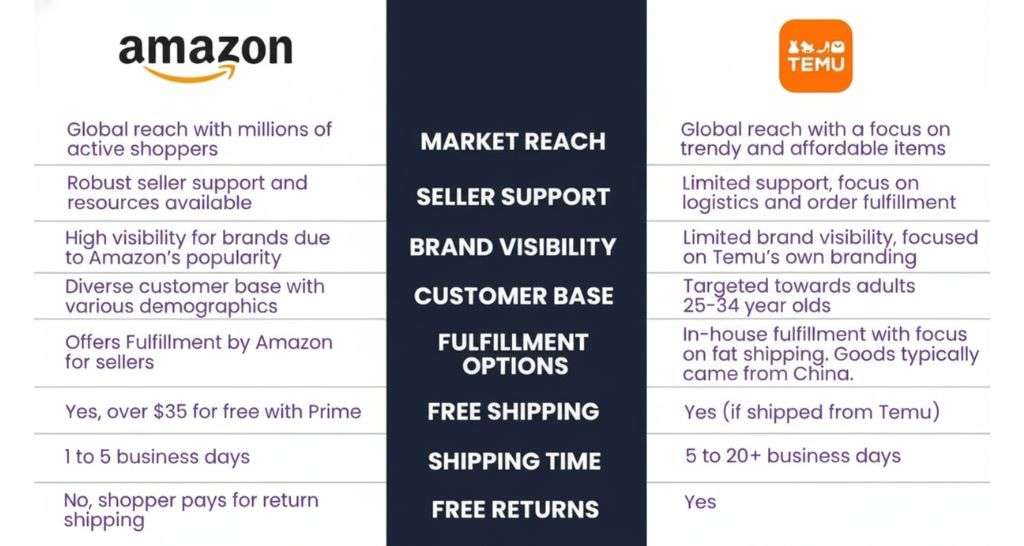
Below is a comparison of Amazon’s and Temu’s market strategies, highlighting their respective delivery timelines.
What Is Temu?
Temu is a Chinese-owned eCommerce platform that has quickly surged in popularity across the U.S. by offering ultra-low-cost products shipped directly from manufacturers.
By removing traditional intermediaries, Temu connects Chinese factories straight to consumers, slashing prices far below those of established retailers like Amazon.
Catering to price-driven shoppers who don’t mind longer delivery times, Temu dominated the market in 2023—becoming the most downloaded eCommerce app, even surpassing Amazon.
Would You Buy or Sell on Temu?
Shopping on Temu delivers unbeatable bargains across countless categories—from household essentials to electronics—often at just a fraction of the cost on other platforms. The trade-off, however, is longer delivery times and the potential for inconsistent product quality.
For sellers, Temu’s expanding reach and massive customer base can be tempting. Yet, competing against low-cost Chinese manufacturers makes sustaining profit margins difficult. Moreover, the platform’s emphasis on rock-bottom pricing may not suit premium or mid-tier brands seeking to preserve value perception.
Pros and Cons of Temu
Pros:
- Extremely low prices
- Vast product selection across multiple categories
- Direct-to-consumer shipping from manufacturers, cutting out middlemen
Cons:
- Longer delivery times compared to traditional platforms
- Inconsistent or lower product quality in some cases
- High competition among sellers, especially against low-cost Chinese suppliers
Temu vs Amazon
Temu vs Amazon Prices
Temu consistently undercuts Amazon on pricing by leveraging direct shipping from Chinese manufacturers and exploiting the “de minimis” import rule, which exempts goods valued under $800 from U.S. customs duties.
This exemption gives Temu a major cost advantage, allowing it to sell at ultra-low prices without the overhead that burdens Amazon’s U.S.-based operations, such as logistics fees, warehousing, and import tariffs.
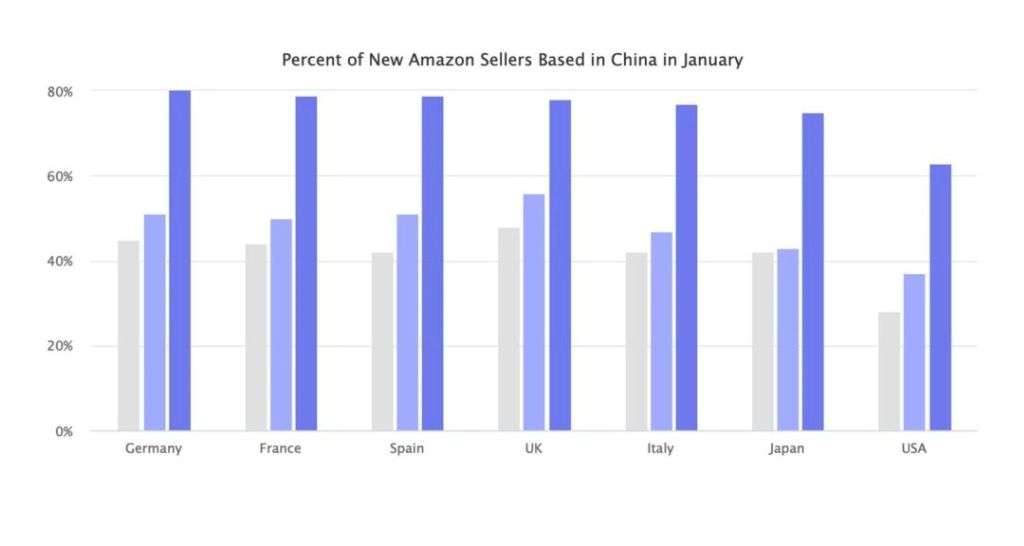
Below is a comparison chart outlining the key fees and tariff differences between U.S. and Chinese sellers operating on Amazon.
Temu Sales vs Amazon
Although Temu has swiftly captured market share with its appeal to budget-minded shoppers, Amazon continues to dominate global eCommerce thanks to its massive customer base and unmatched product variety.
Temu’s growth trajectory is impressive—especially among price-sensitive consumers—yet Amazon’s robust logistics infrastructure, Prime membership perks, and brand trust firmly sustain its lead in total sales and market influence.
Temu vs Amazon Quality
Amazon maintains a strong reputation for dependable delivery, verified sellers, and exceptional customer service—ensuring a consistent and trustworthy shopping experience.
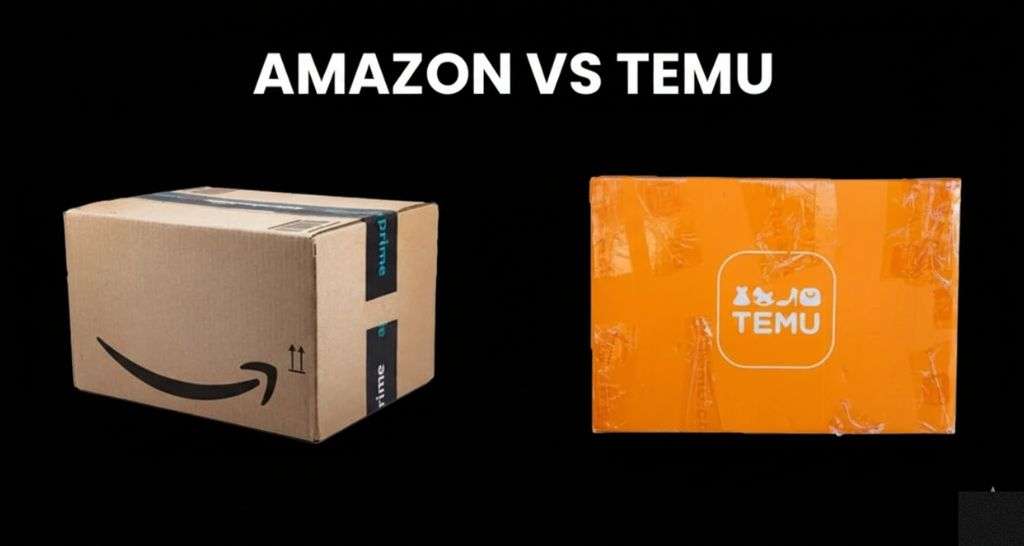
By contrast, Temu’s emphasis on ultra-low pricing often leads to variable product quality and longer shipping durations. Shoppers on Temu are encouraged to review feedback carefully and set realistic expectations for both product performance and delivery timelines.
Temu vs Amazon Ethics
Both Amazon and Temu face growing ethical scrutiny within the global marketplace. Amazon has been criticized for its labor conditions, carbon footprint, and overwhelming market power, while Temu’s dependence on ultra-low-cost manufacturing raises questions about worker welfare and supply chain transparency.
Ultimately, ethical purchasing comes down to consumer priorities—some value affordability and accessibility, while others prioritize fair labor, sustainability, and responsible sourcing when choosing where to shop.
Temu vs Amazon Market Share
Amazon continues to command a dominant position in global eCommerce, bolstered by its powerful logistics infrastructure, extensive seller network, and the loyalty of Prime members worldwide.
Meanwhile, Temu—though still a smaller contender—has achieved remarkable growth by targeting cost-conscious markets and appealing to shoppers prioritizing savings over speed. The escalating rivalry between the two highlights a broader transformation in consumer behavior and value perception across the digital marketplace.
Is Temu Going to Steal My Amazon Customer Base?
Temu’s aggressive pricing and rising popularity may lure price-sensitive shoppers, posing a potential threat to Amazon sellers who compete primarily on cost.
Nevertheless, Amazon’s vast catalog, dependable logistics, and trusted customer service continue to secure strong brand loyalty. To protect and grow their customer base, sellers should emphasize product quality, differentiation, and exceptional buying experiences—factors that low-cost competitors struggle to replicate.
Main Differences Between Temu’s and Amazon’s Business Models
- Product Sourcing: Temu sources goods directly from Chinese manufacturers, minimizing intermediaries and cutting costs. Amazon, by contrast, operates with a hybrid model—hosting both third-party sellers and its own inventory.
- Pricing Strategy:
Temu is built around an ultra-low-cost model, while Amazon spans multiple pricing tiers, from budget-friendly to premium. - Shipping: Temu relies on direct international shipping, leading to longer delivery times. Amazon prioritizes speed and reliability, particularly through its Prime network.
- Customer Base: Temu appeals to price-conscious shoppers, whereas Amazon serves a broader demographic seeking a balance of affordability, speed, and superior customer service.
The Role of Orichi Commerce in Empowering Modern eCommerce Sellers
How Orichi Helps
Orichi Commerce serves as an all-in-one growth powerhouse for today’s Shopify entrepreneurs. Tailored to boost conversions and streamline operations, Orichi’s suite of super-apps empowers sellers to track performance, manage campaigns, and drive sales seamlessly across TikTok, Facebook, and Instagram.
Through smart integrations like multi-pixel tracking, quantity breaks, combo discounts, and real-time social feeds, Orichi maximizes store efficiency and marketing precision.
Built for simplicity and scale, Orichi automates complex sales and marketing workflows, giving merchants data-backed insights to grow faster and smarter.
With over 1,000,000 installs and 800+ five-star reviews, Orichi is trusted worldwide to elevate performance. From pixel tracking to bundle automation and cash-on-delivery solutions, every Orichi super-app is designed to increase profitability and enhance customer engagement.
Start your free trial today to see how Orichi can turn your Shopify store into a connected, data-driven growth engine.
Final Thoughts
The eCommerce landscape is evolving at lightning speed — and innovation is the ultimate advantage. With Orichi Commerce, Shopify sellers can streamline operations, unify multi-channel sales, and create smarter, high-performing online stores.
By prioritizing customer experience, automation, and data-driven insights, you can transform every visitor into a loyal customer and every interaction into measurable growth.
Stay ahead by exploring the Orichi Blog, where we share the latest eCommerce trends, actionable strategies, and merchant success stories to help you thrive.
The future of online business belongs to those who adapt, optimize, and innovate — and Orichi is your trusted partner on that journey. Read more in Blog Orichi